A model system for a molecular question
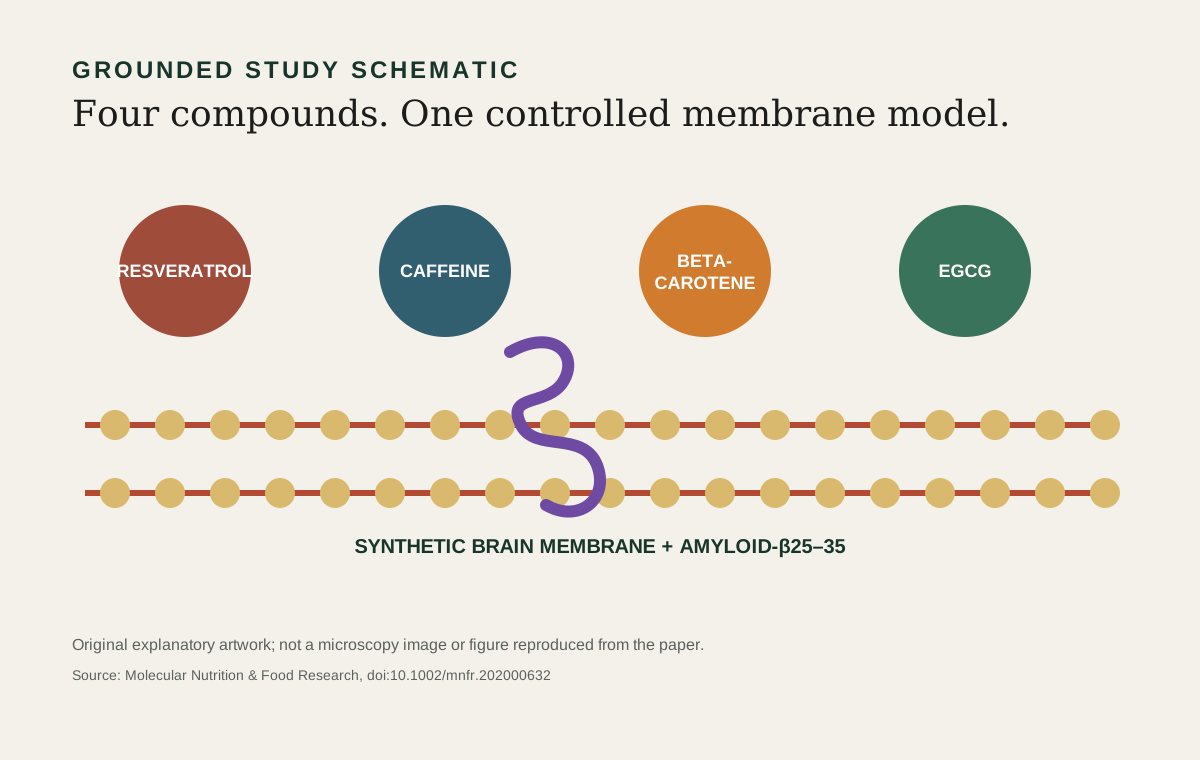
The study investigated resveratrol, caffeine, beta-carotene, and epigallocatechin gallate (EGCG) in synthetic brain membranes with amyloid-β25–35.
Different compounds affected membrane properties and aggregation in different ways. The work explored a membrane-mediated mechanism in a biophysical model system.
Scope of the evidence
Synthetic membranes make it possible to isolate aspects of a complex biological process. They are not a substitute for the physiology of a person.
This is not a clinical trial, and the paper does not establish that these compounds prevent or treat Alzheimer’s disease.
The published record
The article by Isabella P. Gastaldo, Sebastian Himbert, Udbhav Ram, and Maikel C. Rheinstädter was first published on September 27, 2020, in Molecular Nutrition & Food Research, volume 64, issue 22, article e2000632.
Sources & further reading
Research summary updated October 5, 2026. Findings describe the linked study and do not establish clinical readiness beyond its evaluation.