HomeLatest research · ASTRO 2026 · Poster 3104 · Boston

From an image
to a clinical question.

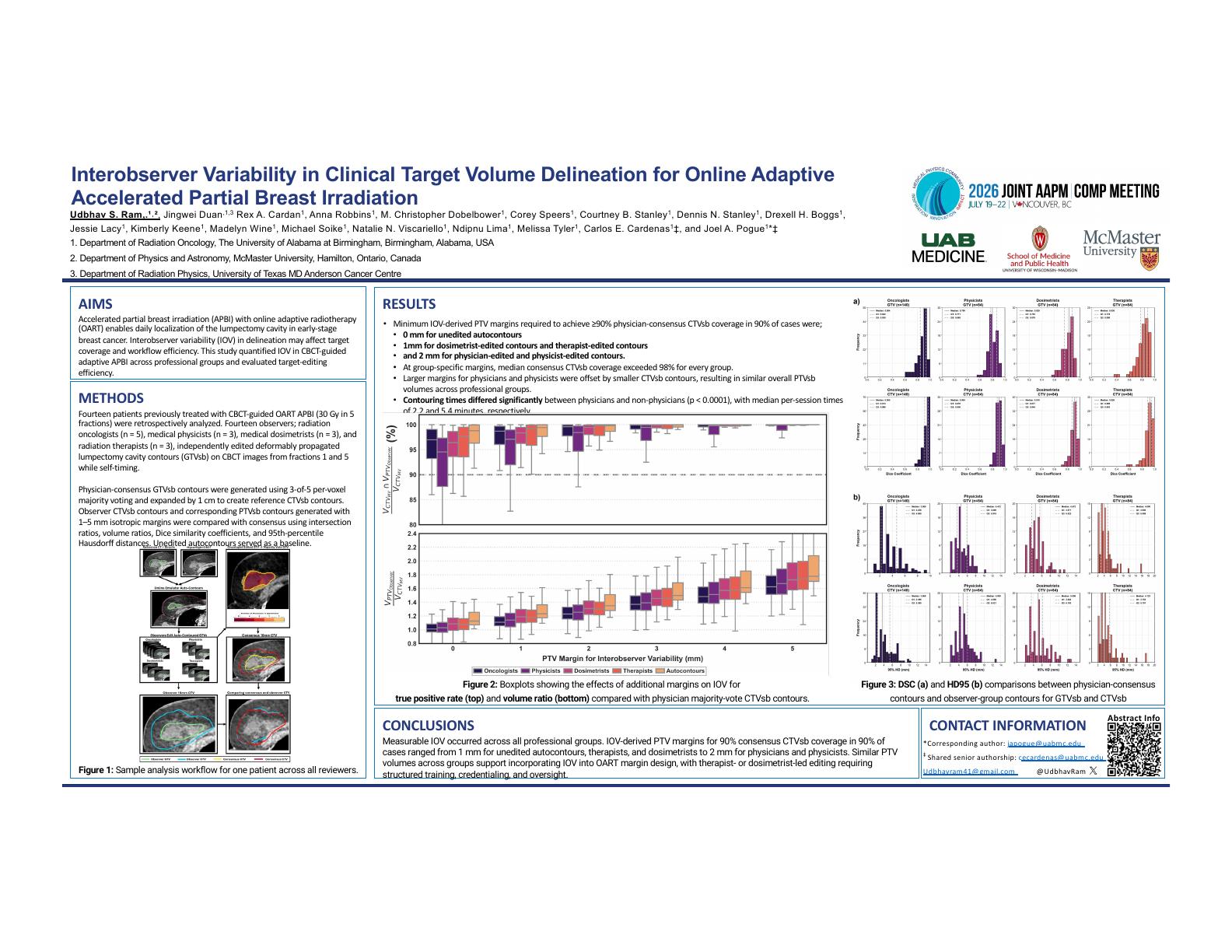
Adaptive radiotherapy adjusts treatment to the anatomy seen on the day. But before a plan can adapt, a person has to decide where the treatment target begins and ends. This work examines how those decisions vary across clinical specialties.

AAPM 2026 poster on contouring uncertainty in online adaptive partial-breast irradiation
Original AAPM 2026 poster on contouring uncertainty in online adaptive partial-breast irradiation · Source
Research index

Six more studies,
each with its own evidence.

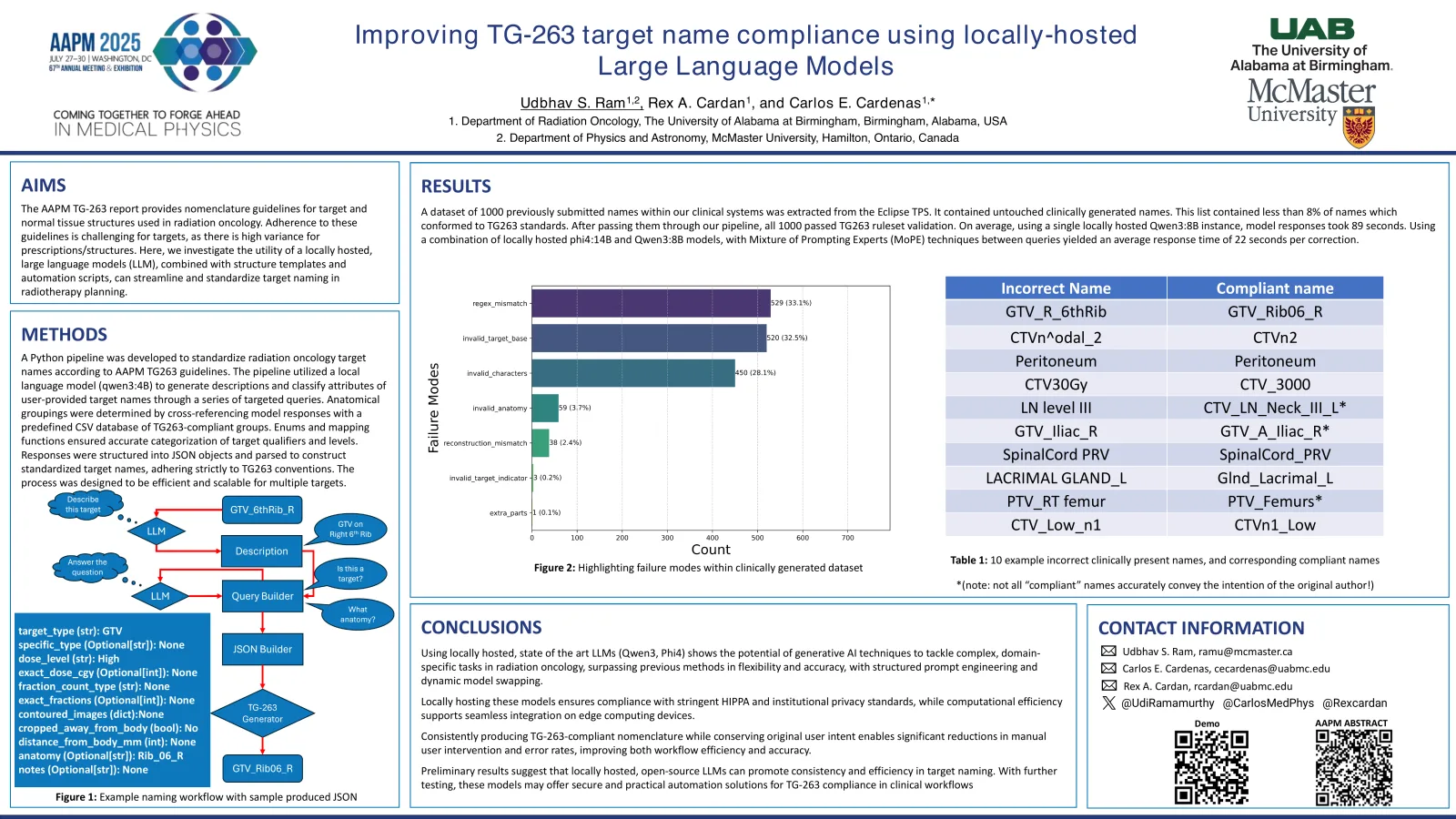
AAPM poster describing a locally hosted language-model pipeline for TG-263 naming quality assurance
Original AAPM 2025 research poster · Open the full poster below for readable figures · Source
2025 · AAPM Blue Ribbon Poster

Teaching a model the clinic’s language.

A treatment-target name is a small piece of text with a large job: it has to preserve clinical intent while fitting a shared naming convention. This project explores where local language models can help, and where a clinician still needs to look closely.

Original public recordings

Watch the study.

Preview images load from this site. YouTube connects only after you press play.

Recorded study presentation · 3:49

LLM based target name adherence in radiation oncology

Udbhav Ram presenting clinical AI research at UAB Radiation Oncology
Presenting clinical-AI research at UAB · UAB Heersink School of Medicine · Source
2025 · First-author journal article · JACMP

A closer look at the treatment plan.

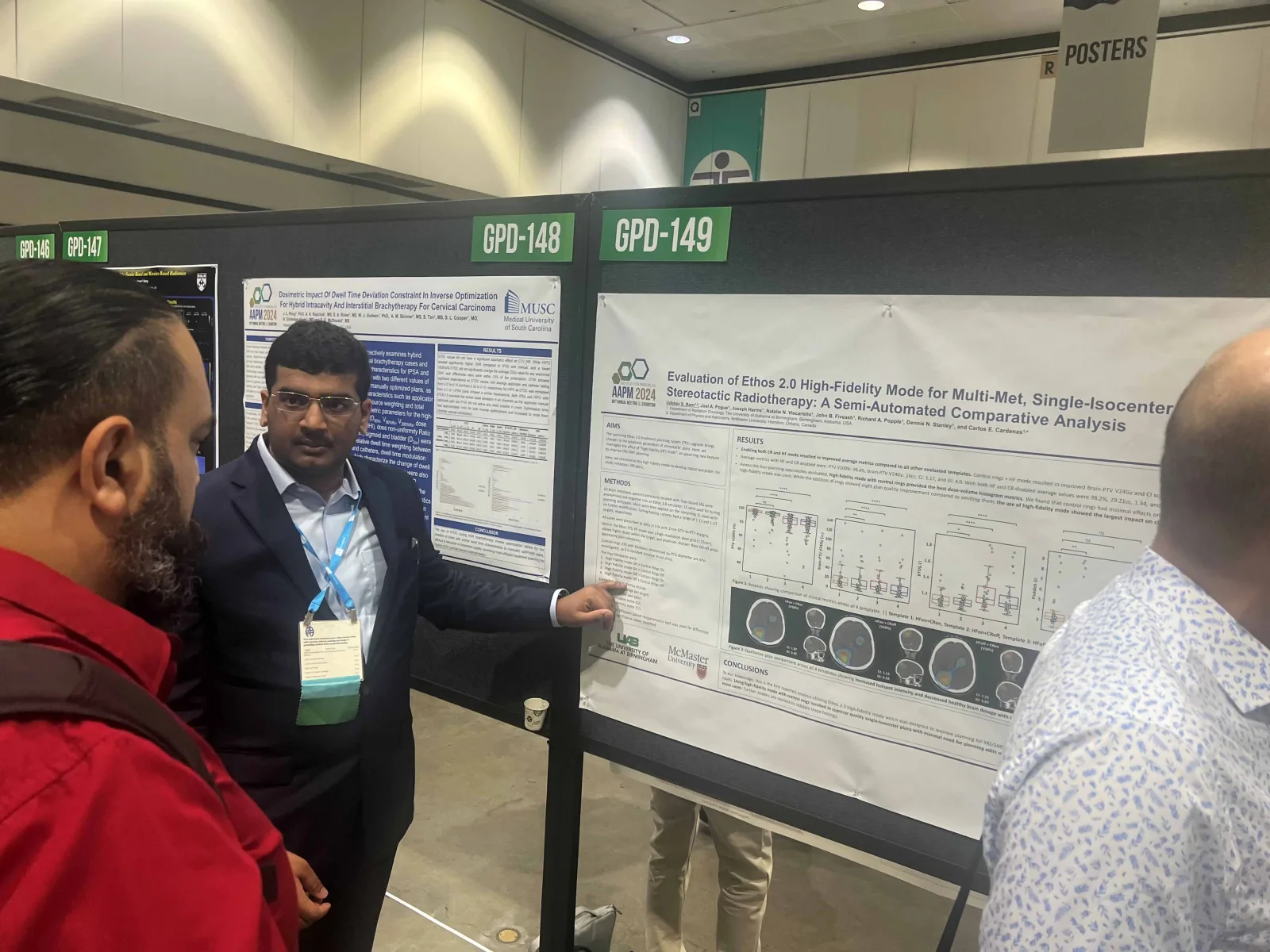
For people with multiple brain metastases, a radiation plan needs to cover the targets while limiting dose outside them. This study asks how high-fidelity planning and control rings change that balance on Ethos 2.0.

Original public recordings

Watch the study.

Preview images load from this site. YouTube connects only after you press play.

Recorded poster overview · 5:04

Udbhav Ram SPScon 2025 Invited Poster

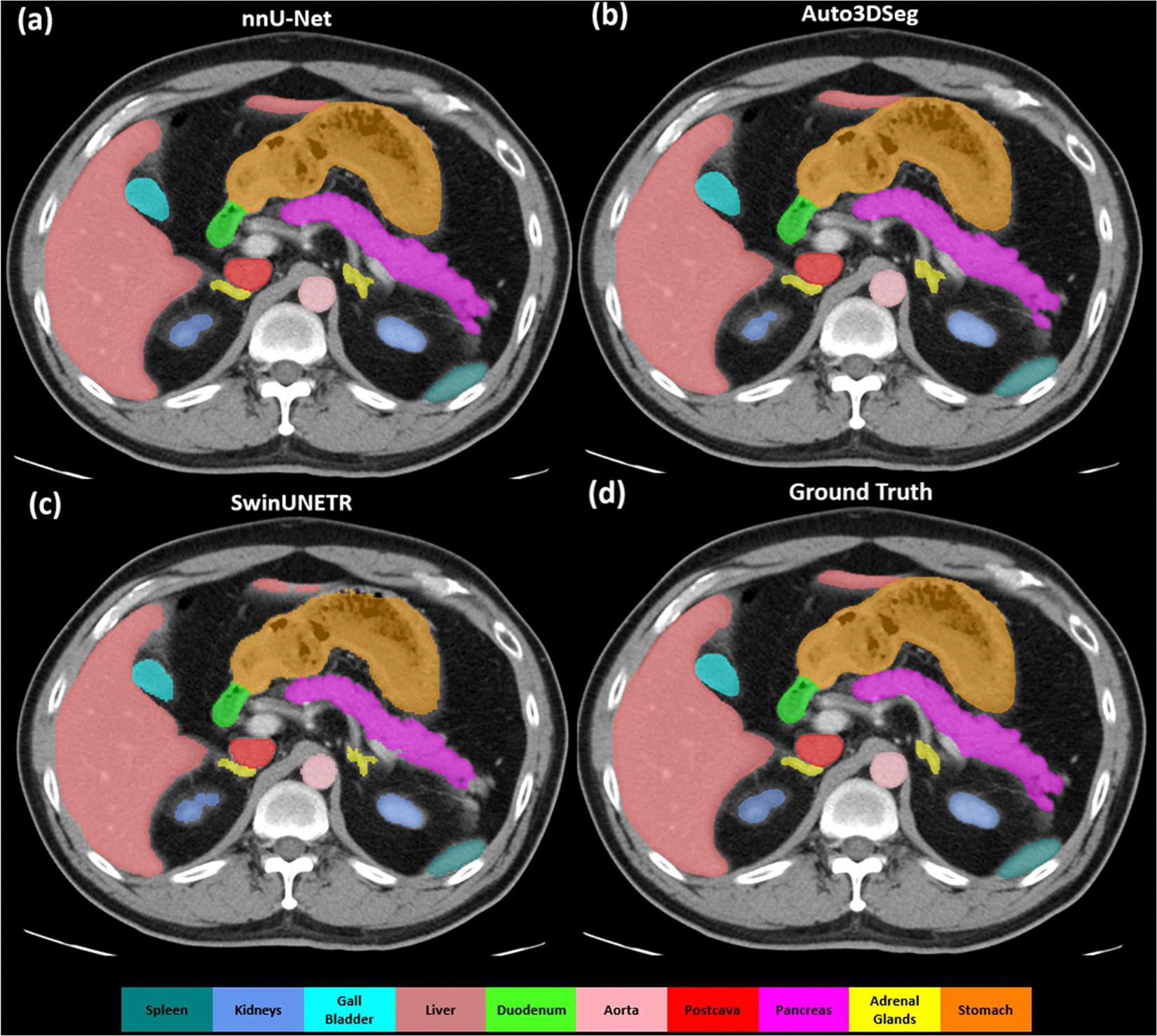
Published comparison of abdominal organ contours from nnU-Net, Auto3DSeg, SwinUNETR, and ground truth
Published Figure 3 · nnU-Net, Auto3DSeg, SwinUNETR, and ground-truth contours · Source
2025 · First-author journal article · Intelligent Oncology

A contour has to work for a person.

Good overlap scores are useful, but they do not tell the whole story of an automatically drawn organ. This head-to-head study pairs quantitative evaluation with blinded physician review.

Original public recordings

3 ways to watch the work.

Preview images load from this site. YouTube connects only after you press play.

Earlier project recording · 2023 · 14:46

Using Deep Learning models to auto-contour abdominal organs in CT scans

Earlier project recording · 2022 · 12:24

Abdominal organs auto-segmentation to reduce patient-wait times in radiation oncology treatments

Earlier project recording · 2022 · 4:18

CUMPC 2022 Presentation

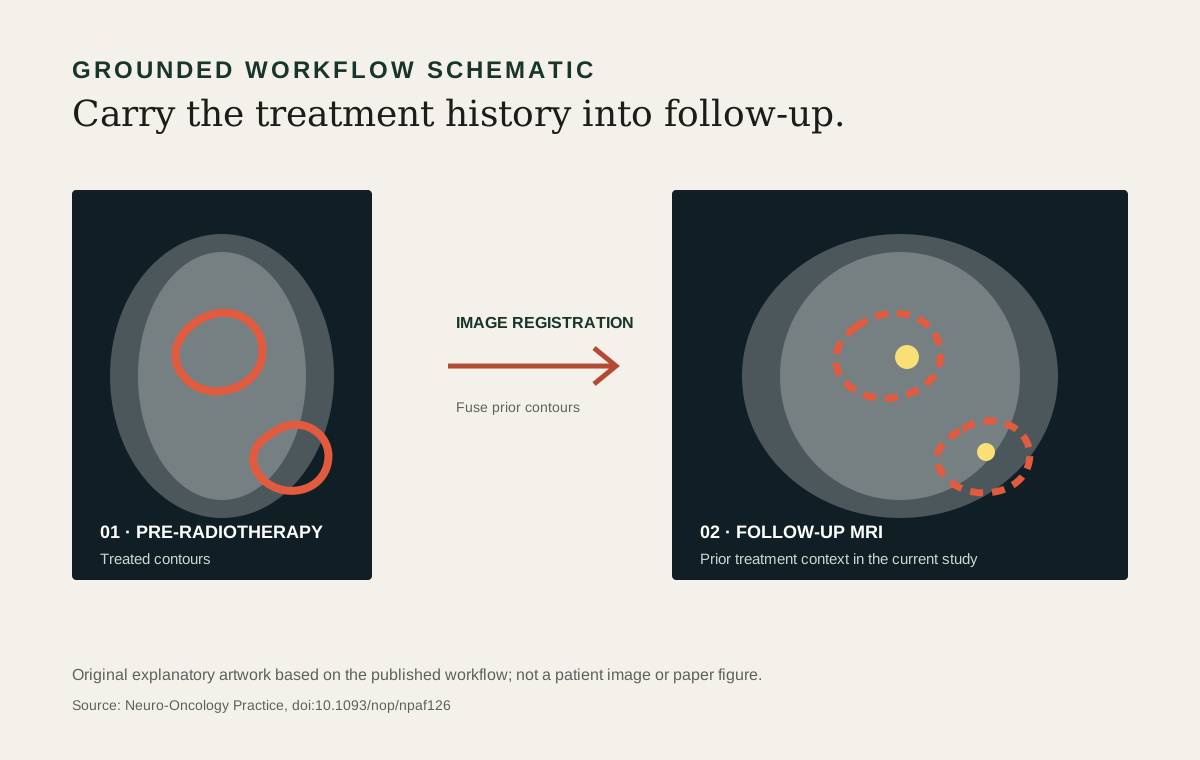
Original schematic of prior treatment contours registered into follow-up brain MRI
Original explanatory schematic of the published contour-registration workflow · Not patient data · Source
2026 issue · Online 2025 · Co-authored journal article · Neuro-Oncology Practice

Keeping the treatment history in view.

Follow-up imaging asks clinicians to understand what has changed since treatment. This project brings earlier treatment contours into the follow-up magnetic-resonance image so that history is easier to review.

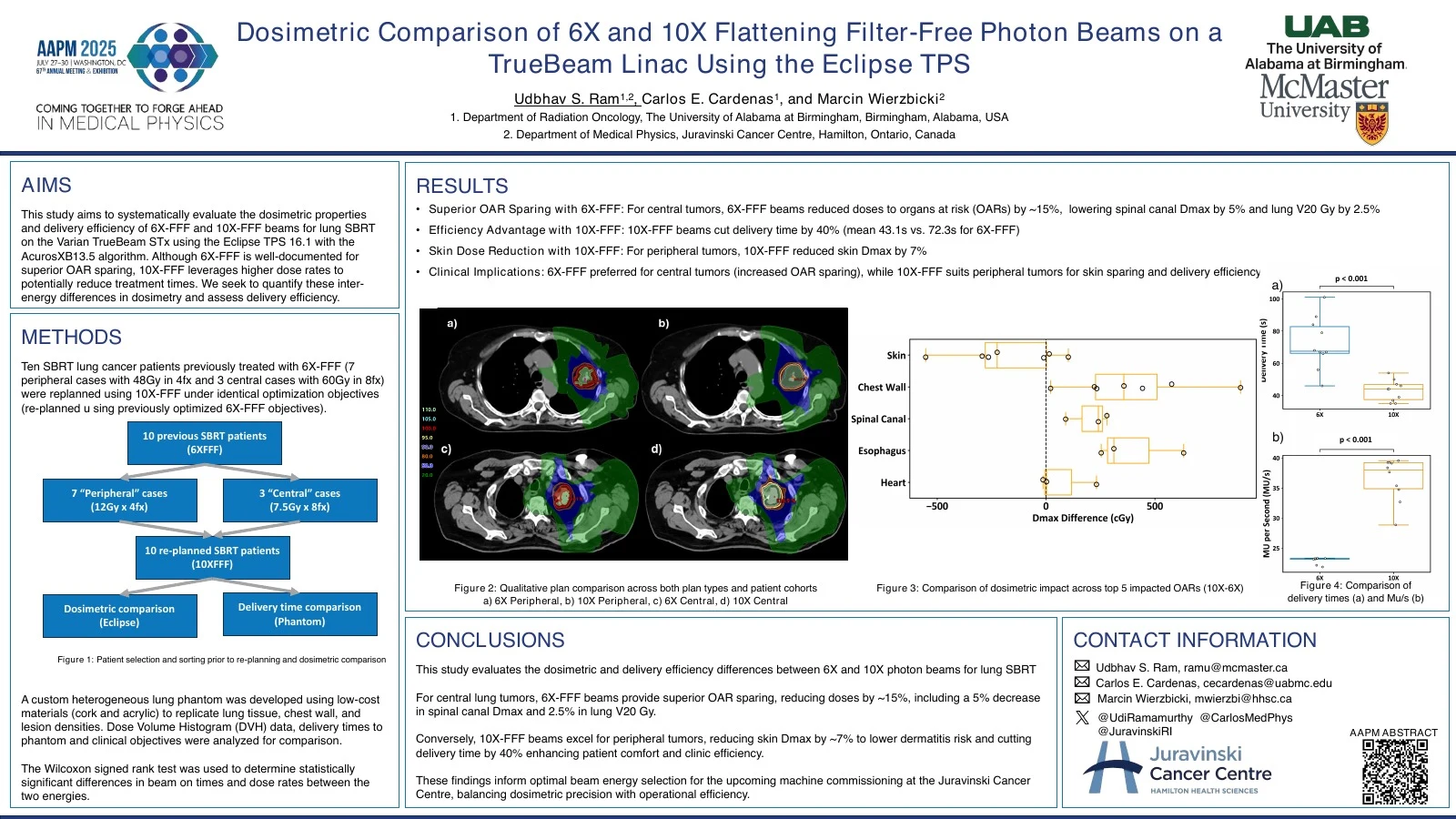
AAPM 2025 poster comparing 6X-FFF and 10X-FFF for lung SBRT
Original AAPM 2025 lung SBRT beam-energy poster · Source
2025 · First-author AAPM poster

Choosing a beam means choosing a tradeoff.

Beam energy affects more than delivery speed. This planning-and-phantom study asks how the choice between two flattening-filter-free photon beams changes lung-treatment dosimetry and efficiency.

Original public recordings

Watch the study.

Preview images load from this site. YouTube connects only after you press play.

Final thesis presentation · 9:14

Dosimetric Comparison of 6X/10X flattening filter free beams at the Juravinski Cancer Centre

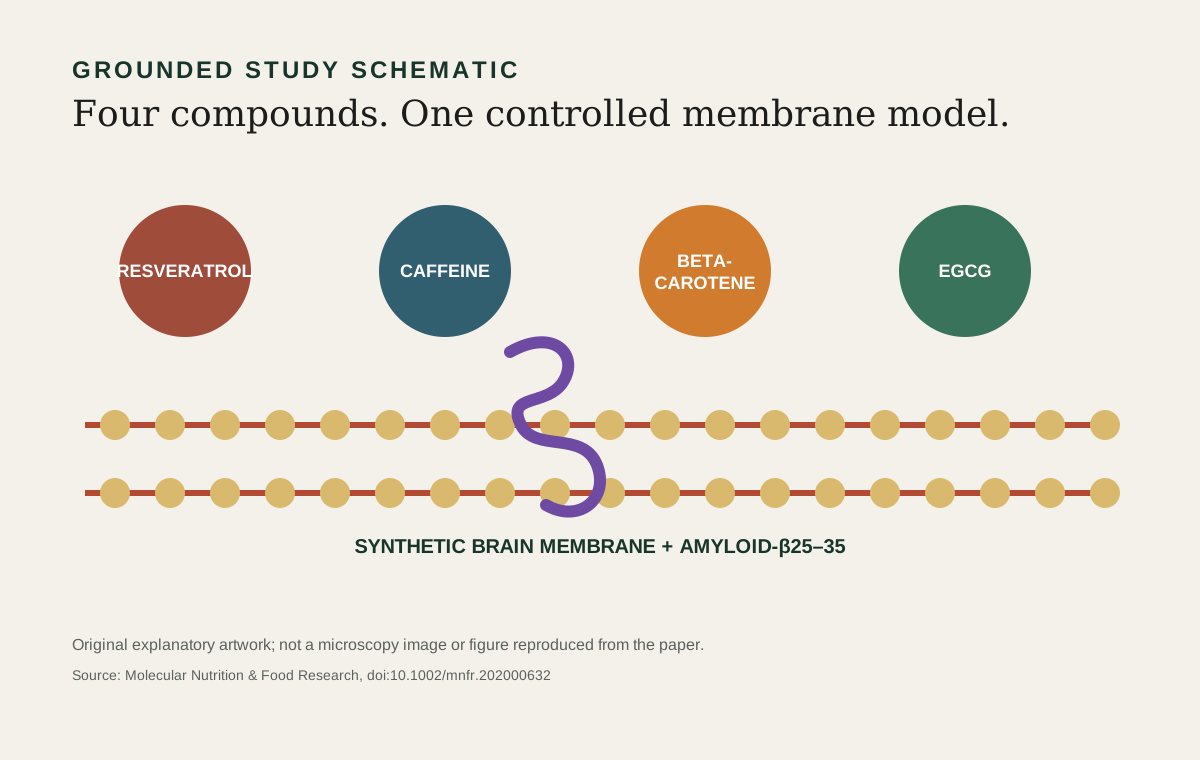
Original schematic of four dietary compounds studied with amyloid beta in a synthetic brain membrane model
Original explanatory schematic of the published membrane model · Not a paper figure · Source
2020 · Co-authored journal article · Molecular Nutrition & Food Research

An early question about membranes.

Before the clinical-AI projects, biophysics offered a way to study complex biological questions through a controlled model system. This paper investigates interactions between selected compounds, synthetic membranes, and amyloid aggregates.

Original public recordings

2 ways to watch the work.

Preview images load from this site. YouTube connects only after you press play.

Research · 12:43

Optimizing dose delivery during fractionated radiotherapy

A recorded presentation on optimizing dose delivery during fractionated radiotherapy, associated with CUPC 2023.

Uploaded October 29, 2023
Event: October 28, 2023

Interactive explainer · synthetic example

Passing a rule
isn’t the same as being right.

My TG-263 work exposed a useful safety distinction. Explore the three checks below; no patient data or clinical recommendation is shown.

Source note“Left liver lesion, gross target”Model candidateGTVp_Liver
The format can pass.

The candidate uses the expected character set, structure, and permitted anatomy label.

Illustrative logic only. The published poster evaluated a reviewed naming workflow; it did not validate autonomous clinical use.

See the methods, results, and limitations →

Earlier questions,
lasting threads.

The research record also includes optical brain measurement, smartphone gel-electrophoresis analysis, augmented reality for surgical models, genomic radiation-dose modelling, and early biophysics.
Browse the research collection